Why I wrote the book Flexible

Flexible by Sean Gilligan

Flexible by Sean Gilligan

At 13 pages (hardcopy) and 43 minutes (audiobook) Flexible is not exactly a novel. Flexible is my collective learning; summarised and distilled in to something bite-size, which I hope both startups and business-people can enjoy. I started writing the book more than 2 years ago, and only recently decided the time was right to create an audio version. Lewis Dunn does a fantastic job of the audio, and backs up the phrase “it’s not what you say, but how you say it”! Self-education through audiobooks has most certainly helped grow Webanywhere as a bootstrapped business internationally. Flexible contains the knowledge to allow you to do the same, providing you apply it.

Being a big fan of audiobooks and listening to them on planes, I thought it would be good to do my own. Some customers who have listened to the book said “How do you get the time?” My answer is simple: if you work on something a little bit each day, and as you think of something, write it down, enormous and overbearing tasks can be broken down into smaller chunks. It’s called “eating that elephant”. To eat an elephant in one go is impossible, but if you divide the elephant into small chunks it becomes possible.

Flexible 5th in Chart

Flexible 5th in Chart

Above all, the reason why I released Flexible is because Webanywhere wants to be the most Fun, Flexible Learning company in the world. Hopefully the tone of the book and the narration gives a light sense of humour, and the duration of the book means that lots of people will listen. Getting through an 8-hour audiobook is quite a battle, 43 minutes on the other hand is much more manageable. At £1.95 it’s not surprising to see my book rise to the top of the charts, as I still believe audiobooks are not mass market in terms of consumer habits. If my book has dropped off since, then it’s possibly because you can get the book for free on SoundCloud. After all, as the book says, it’s better to be a giver than a taker. It’s decisions like this which will make Webanywhere the most Fun, Flexible Learning company in the world!

To be flexible we need to give you two options for listening:

Click to listen to Flexible via iTunes 

Click to listen to Flexible via SoundCloud

Skilling up our children for the future workplace

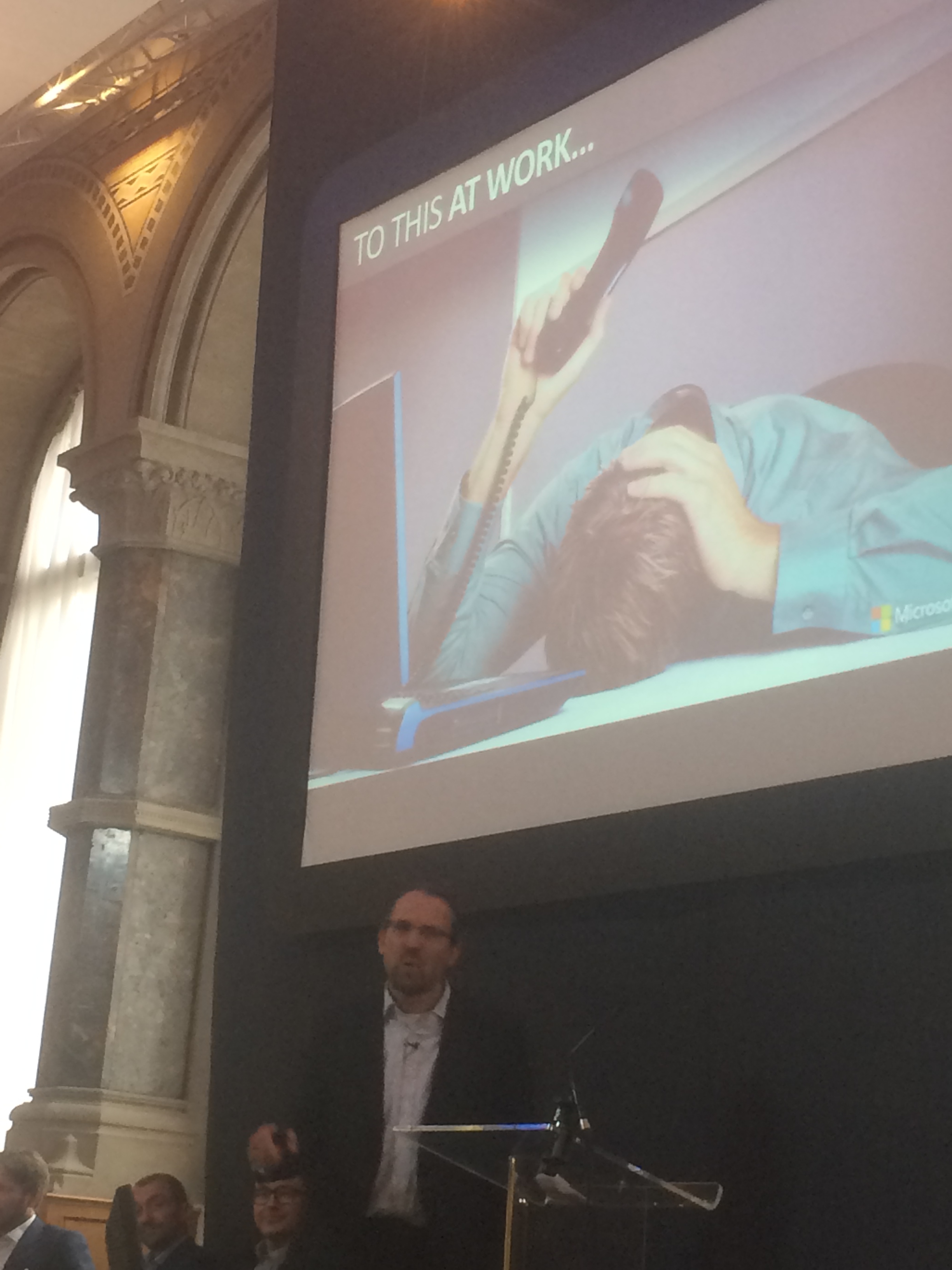
Dave Coplin Chief Envisioning Officer Microsoft UK

Dave Coplin Chief Envisioning Officer Microsoft UK

In 10 years’ time there will be large, established companies which do not exist now. Within those companies there will probably be roles and jobs fulfilled, again which are not even advertised in the here and now. If you have watched the latest episode of Panorama on the BBC, Rohan Silva talks about the opportunities and threats of the digital age. Some jobs in the future are more threatened by the digital revolution than others. Thankfully, teachers’ threat of loosing their jobs at the hand of digital innovation is just 2%, whilst other roles such as paralegal and secretarial positions and becoming less and less widespread.

KPMG Enterprise held a seminar with keynote speakers today, presenting at Aspire in Leeds city centre. Chief Envisaging Office Dave Coplin of Microsoft UK; Adam Beaumont, Managing Director of AQL; Bryan Redpath, Rugby Coach at Yorkshire Carnegie; and Luke Allen, Director at KPMG Nunwood gave speeches, with audience participation taking place via an audience voting system. The event was hosted by David Parkin, former Business Editor at the Yorkshire Post.

Firstly, Dave Coplin talked about how human beings need to use technology in the future. Business needs to be reimagined because the way we work today does not work. How many computers at home are better than those in the workplace? This leads to productivity problems. The answer to the question asked of hundreds of employees in the workplace was astounding. What constitutes a productive day at work? Lots of people answer “clearing my inbox”, a rigid process that does not change a real issue in businesses. Organisations naturally resist change. What businesses need to focus on is the outcomes, not the processes. We are still working like the Victorians, when a digital society can give you new, different options. Dave Coplin has written a book called “The Rise of the Humans” which is well worth a read.

In the modern workplace, mobile disruption and the problem of “too much information” are becoming real issues. Indeed, in some schools mobile phones have been banned from classes for this very reason.  Dave talks about the problem being the people sending the emails. Data holds the key; data will define our future. The ability to use data in different ways allows businesses to predict the future. Gathering more data gives you fundamentally different answers. An example of this would be asking which of the following cars in the most environmentally friendly: The Toyota Prius or the Land Rover Defender? Most of the audience thought Toyota’s flagship hybrid had fine green credentials, but when you look at the data over the life time the Land Rover wins. You might ask why? The answer is there are lots old Land Rovers still going strong on our roads – they last longer!

Pattern-matching in data will allow us to create awesome new services. Take a resent innovation with Skype, where you can now, in real-time, speak to someone in a foreign language and Skype will translate your words into English, or indeed any other supported language! This changes the game, and will allow future generations to do business in non-English-speaking jurisdictions much more easily.

Our children in the modern workplace will have to embrace a culture of transformation. The rise of the machines will allow us to greatly extend our businesses in ways we have not yet thought possible. The core skills the future workforce will have to demonstrate are those which cannot be replaced by robots. Creativity, critical thinking, collaboration, and empathy are the skills that future business will want to invest in. Our children must work with the machines and not against them, as our traditional middle-class, white-collar jobs become redundant in the new digital age, and new higher value digital jobs are created.

Webanywhere meets Basecamp, Chicago

Sean Gilligan (Webanywhere) and Michael Berger (Basecamp)

Sean Gilligan (Webanywhere) and Michael Berger (Basecamp)

The old meatpacking district is really taking off in Chicago’s West Loop. With the Google’s Mid-West HQ only 5 minutes away, we met our neighbours Basecamp at our new office for lunch. Basecamp is one of the world’s favorite project management software companies and Jason Fried one of the co-founders has written a number of successful business books such as Rework and Remote both of which have been best sellers with the New York Times and the Wall Street Journal. Jason Fried’s mum was looking to buy an iMac from the local Apple store and the customer experience was so exceptional she recommended that Jason, the co-founder of Basecamp, hire Michael Berger.

Michael had just got back from re-locating his 96-year-old grandmother from Florida and was able to meet myself and my brother for lunch before we jumped on a plane back to the UK. Over lunch we discussed a whole range of issues, including how Basecamp are rewriting their project management software from scratch. Basecamp are definitely getting their name out there – sponsoring music festivals and advising Coursera on some project management courses.

Michael was particularly interested in how Webanywhere gains feedback from its customers. Michael’s role at Basecamp involves QA, and part of the unique work culture at Basecamp means he often works from home in a morning, goes to the gym and then heads to the office. Jason, who leads design, and Daniel who leads engineers, are equals and opposites. Whilst Jason is a permanent residence in Chicagoland and is a well know business-face, Daniel spends time in California and Southern Spain while pursuing his interest in racing cars.

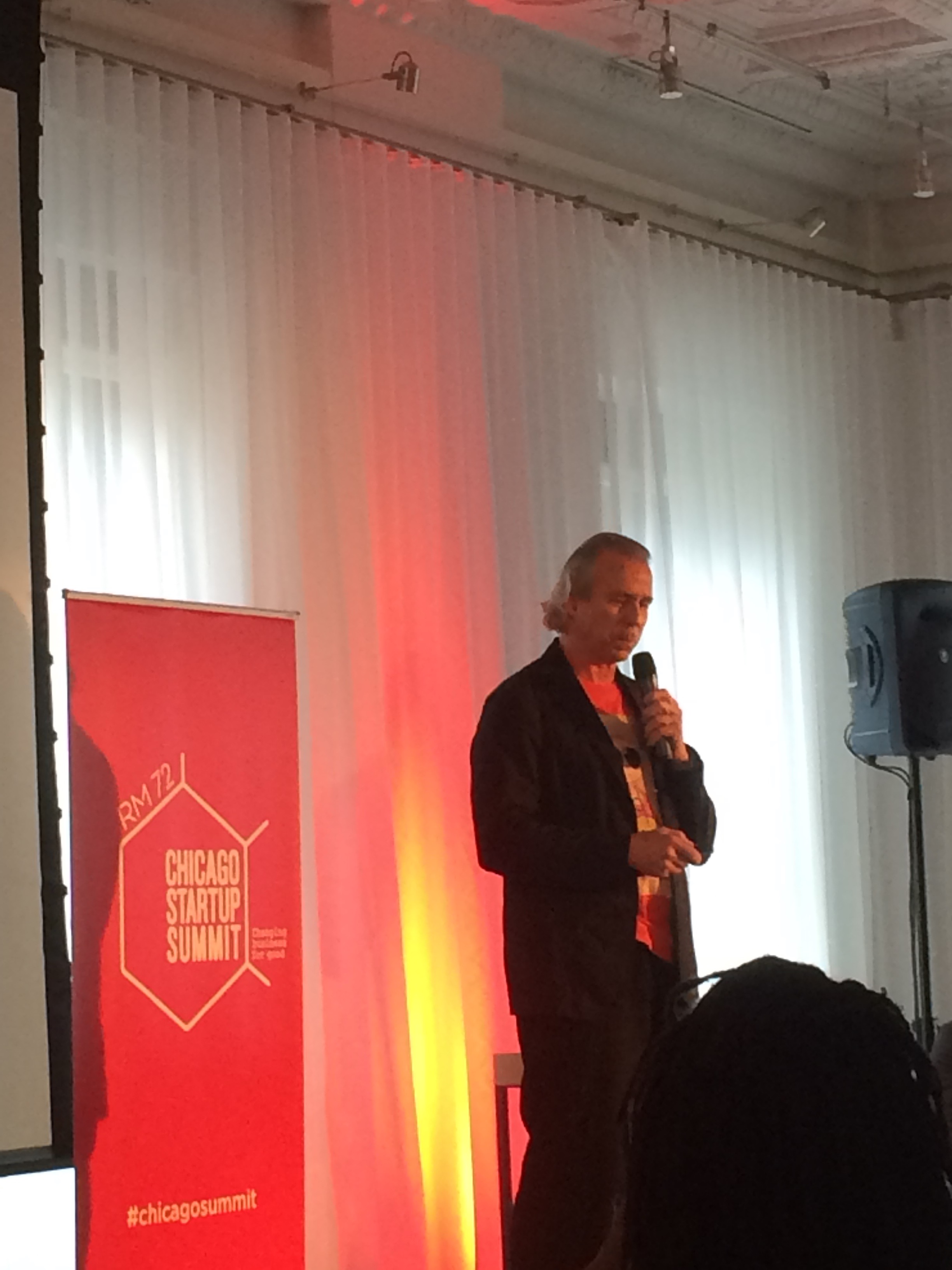
Howard Tullman of 1871, Chicago Startup Summit

Howard Tullman of 1871, Chicago Startup Summit

Basecamp’s open APIs means it can be integrated with learning management systems such as Moodle. One of the challenges Basecamp has is the education of the user. Users in positions of authority can ensure the whole organisation is using the product, whilst more junior members of staff may struggle to get further buy-in. Basecamp helps SMEs in particular get stuff done by providing best-in-class project management software. In addition, Amazon’s Jeff Bezos is a mentor to Basecamp, who have millions of paying customers and perhaps go against the grain of most software. Basecamp believes in “less as more”. Perhaps this is why they changed their company name from 37signals to Basecamp a number of years ago. Furthermore they trimmed down their product line from several products (such as Campfire, Backpack and Highrise) to just Basecamp.

The “billionaire rule” in business is focus and Basecamp have bet the farm house on their product. They believe you don’t need to spend money on marketing, you just need a great product. Basecamp certainly has a great product, with interested followers and participants such as Bezos.

Chicago Startup Summit

Chicago Startup Summit

Earlier in the week I visited the newly-installed Virgin Hotel in downtown Chicago. The Chicago Startup Summit, held in conjunction with Virgin Unite (The Branson Family’s foundation charity), was held to educate and impact local startups. Seminars were held by One Trick Pony, a design agency based in Philadelphia and Detroit Soup, a crowdsourcing charity featured in a recent BBC documentary. Other people presenting included a number of “Pitch to Rich” finalists who had been flown in from London. Andrew Hunt finished the day talking about how he planned to import a little-known fruit known as the baobab from the African continent, which would ride the current trend of super food consumption whilst providing a profitable harvest for African farmers. Andrew had been in a state of depression as a young marketing executive in London, only to find himself inspired after 4 years living in Africa. Andrew spotted an opportunity of driving demand for the African superfood using his skills and expertise. Richard Branson awarded Andrew’s company £100,000, allowing him to move out of his kitchen and employ 15 staff.

Webanywhere USA Team at The Little Goat, Chicago

Webanywhere USA Team at The Little Goat, Chicago

What was particularly good about the week in Chicago was seeing other British entrepreneurial startups alongside Webanywhere. Chicago is too often skipped for the more glamorous destinations of New York and San Francisco, but is now becoming a real contender for startups, with the highest proportion of female-led startups in the USA. We on-boarded 3 new members of staff at our Fulton Market office and met a few of our key customers. All in all, another good week in America and my 2nd week in one month – which is a personal record!


Moodlemoot USA 2015
August 6th

Moodle Moot USA Review #mootus15

This week I’ve been attending the 2015 US Moodle Moot in Minneapolis. You might remember I attended the Dublin Moot a few months back, well this is like that only bigger! The big push this time was on the ideas of “learning through feedback”, something very closely related to the ideas of Learning Analytics discussed at the Irish Moot.

The big news at this conference was about Moodle releases, and it was announced that Moodle 3.1 will be an LTS release, as is done every four releases. Of course, this means we won’t be seeing it until next May, but it’s always important to be prepared! An LTS allows us to develop for and from a more stable code-base, so we can provide more world-class service for our customers.

Moodle HQ are also launching and relaunching some other products, including the latest version of the Moodle Mobile app for all modern smartphones, the MoodleCloud free trial platform and the Moodle Association. This last one is the most exciting because it turns the development of Moodle into a more democratic operation. Companies or individuals pay a fee to become a part of the Association (ranging from $100 to $10,000), and are then invited to submit ideas and requests for development. All association members then vote for the proposition they like best, and the fees are put towards development for it. I think this is a really interesting model for funding (a similar thing has already been tried with communities in Detroit, to great success), and I look forward to seeing what the Association can produce.

MoodleCloud is an interesting proposition to us as suppliers, and we think it’ll really help to sell people on the benefits of the open-source LMS. Instances can have up to 50 users and have 200MB of storage space, so it’s perfect for a teacher in class who might not want to use or have access to a full VLE offering. Additionally, they won’t need to worry about security or updates – being a cloud platform, MoodleCloud will be kept always up-to-date. These Moodles will be ad-supported in order to cover hosting costs, but otherwise are full-featured. While students will see standard Google Ads, teachers will be offered services, to help promote the work we do.

As well as offering MoodleCloud, Moodle have identified four key priorities for the development of the LMS:

  1. Usability
  2. Competency-based education
  3. Templates
  4. Moodle Mobile 2.0

I think these are great things to aspire to, and we’re fully behind them in their endeavours, especially number four – with social learning on the grow, a focus on making the app better really is a no-brainer.

During the conference we presented with Apollo Education Group on the topic of bleeding-edge learning and UX design.  After a brief introduction by myself, Josh Painter, Vice President of Apollo Professional Services, took over and delivered a great talk on how Moodle’s learning experience can be enhanced by some awesome plugins they have developed. Apollo’s new theme and user interface is used to deliver their Innovator’s Accelerator, which features some of the most prestigious innovation experts and authorities from around the world, such as Clayton Christensen, a professor at Harvard Business School.


Education Technology 2015 Review, Leeds

Rebecca Dalzell Education Manager Webanywhere and Mr Mitchell of Educating Yorkshire

Rebecca Dalzell Education Manager Webanywhere and Mr Mitchell of Educating Yorkshire

Yesterday saw EdTech 15 in Leeds at the Hilton Hotel, hosted by Webanywhere and including a keynote speech from Educating Yorkshire’s Mr Mitchell. I opened the conference sharing what I see to be the 7 big opportunities for EdTech:

Firstly, Developing Skills for Life Long Learning. With graduates these days having an average of 27 jobs in a lifetime, re-skilling will be essential if individuals are to be successful in the modern workplace.Learners of the future will need to have a growth mindset and believe that intelligence is not fixed and can be grown. Secondly, increasing family engagement can be transformed by EdTech. Tools such as homework notification tools for parents can do this and Skype for Education can allow for private and secure communication between teachers and parents when parents are difficult to reach in school. Planning for future education opportunities such as college, as well as career paths, is also very important. With graduates now having debts averaging £30,000 in 2015 (up from £20,000 in 2014) value-adding and employability issues are high on the agendas of Universities and Colleges. Improving teachers’ productivity through new technology and reducing workload is another area for innovation. Meanwhile, closing the gap, continuous professional development and making learning accessible to all are further opportunities where educators and technologist can collaborate.


Education Technology 2015, Leeds

Education Technology 2015, Leeds

Mr Mitchell, who is now Headmaster of the Co-operative Academy in Leeds, and who was born and raised in Dewsbury, talked about importance of Education Ethos. Mr Mitchell described how, when Microsoft changed the default setting for meetings in their Outlook software from 1 hour to 30 minutes, productivity was massively increased globally. Focussing on the simple things can sometimes have the greatest impact.

He continued to remark about the importance of building resilience and the character of both the teacher and the learner. 75% of the issues in High Schools are behavioural, so teaching both teachers and pupils emotional intelligence and how to build relationships can help schools grow and prosper. Sometimes teachers’ lack of emotional intelligence leads to double standards; this is why respect has to be earned. Values are important to underpin everything we do in school, and “we are only as good as the most junior members of our team”. The junior members have to give it all and do what it takes to make the organisation successful. If the culture and values are not lived by our most junior members of staff we will never be successful.


Our very own Ben Wagner then took the audience through some of the latest trends in EdTech and demystified some EdTech jargon. Ben went through various case studies on the practicalities of how EdTech can be implemented to save teachers time and reduce the workload. Flipped classrooms, personalised learning pathways and blended learning stories were discussed in a question-and-answer session.


Rob Faulkner, our e-Safety specialist, gave a talk on how to protect teachers and children online. Rob described some of the security breaches which have hit the press in the last year, including celebrity iCloud photos going missing and massive data loss at Sony Pictures. Poor password management is a major security issue, especially where most individuals use the same password for most of the website and services they consume.

To be prudent online users must use different passwords online for each site, or indeed use password-management software such as LastPass, PasswordSafe or PasswordBox as master keys to their online worlds. Rob advised on 2-factor authentication for popular services such as Facebook and Twitter in order to ensure greater levels of security. 2-factor authentication means, upon logging into a service, you receive a password pin via SMS to ensure you are indeed who you say you are. Rob warned about giving passwords to 3rd parties over the phone, especially if they called you. The latest anti virus software must be used and you should be aware of malware found on app stores by examining the review and reputation of apps online.

If you’re still using Windows XP and are connected to the Internet, you really must upgrade – this no longer receives security patches from Microsoft – and it’s very important you ensure that you are on the latest versions of Adobe Flash and Java in order to safeguard yourself. Remember to challenge your staff and share your knowledge. Don’t be afraid to ask.


Paul Quinn, Assistant Headteacher, The Holy Family Catholic School, Keighley

Paul Quinn, Assistant Headteacher, The Holy Family Catholic School, Keighley

Paul Quinn, Assistant Headmaster of The Holy Family Catholic School, gave his presentation on continued professional development (CPD). New government policy means pay rises are now subject to teacher performance, so more proof is needed to demonstrate you are indeed a good teacher. Senior leaders have to create a culture that allows pupils and staff to excel. Leaders and governors need to use incisive performance management tools. Teachers have been asked by the “powers that be” to reflect and debate on the way they teach. They need to be deeply involved in their professional development.

The Holy Family School are increasing in-house training, sharing good practice and compliance for safeguarding using online tools. Teachers are already good at social interaction as they have to entertain and educate people all day, so setting goals and attainment targets is a second nature to teachers.

So what do teachers need help with? Teachers want to reduce paperwork as this can be a barrier to taking work home. Paper can be taken out of the equation with online learning platforms for teachers. Automatic notifications for professional development can help senior leadership teams eliminate low-value tasks such as reminding staff to fill in forms.  Teachers doing their CPD online from home gives them time to reflect away from the hustle and bustle of the classroom. Teachers can share their best practice hints and tips with other teachers in school. More senior staff could even coach newly qualified teachers (NQTs). It was recommended by Paul that, in rolling out an online teacher learning platform, NQTs should be targeted first and then adoption should be built up  from there. When asked about the payback for deploying such a system, Paul described a year two benefit after the year one set up.


Mark McManus Cloud Lead Microsoft Education

Mark McManus Cloud Lead Microsoft Education

Mark McManus closed off the day by showcasing Microsoft’s cloud based offerings starting by explaining Office 365 was for teachers. There are three places for storage on the platform: Email storage of 50GB per user, OneDrive which has uncapped storage and finally a shared storage area where assets and documents can be shared online. Office 365 takes the best of Microsoft’s Office productivity software and takes it online. All staff and students can use Office 365 on up to 10 devices for free, opening up the possibility of less tech-savvy families using the software (providing their school or institution has subscribed to Microsoft). Office 365 not only works online, it works on all types of devices ranging from Apple’s iOS iPhones and iPads to Google’s Android operating system and Google Chromebooks.

The Office 365’s offering is free to all education organisations in the UK and has the same level of functionality as the premium enterprise version of the software. Documents can be download for working offline and then can be re-synced. In a future release you will be able to have greater control on when and where you sync your files. Furthermore, Skype for Business is also free for education users and other apps such as the Newsfeed and Yammer allow you to create private social networks within your school.

Mark continued to explain some the benefits and advantages of Office 365 by explaining the Presence function. A teacher can display to other users whether they are busy or not. Other users can then decide on how to communicate with the the teacher based on this presence status. One teacher explained that from 6pm to 6.30pm daily they would be available for homework help, and found that students used this time to instant message the teacher and conduct private Skype tutorials out-of-hours.

Office 365 is not just Word, Excel and PowerPoint online. Office Mix and the video app allows teachers to create flipped classrooms where audio and quizzes can be added to PowerPoints and these can be shared with students as videos online. Another trend which is happening in school is moving school servers out of the school building and onto the cloud. Some Network Managers and Headteachers get nervous at this thought. Mark’s reply is simple: How many schools have full time security staff? His answer was to explain that, in schools, there are zero staff and even big Universities usually only have about 3 full-time IT security officers. At Microsoft their whole business has been bet on the cloud so they have hundreds of engineers working around the clock to ensure security is of the highest standards. Azure cloud server farms are also 100% carbon neutral which is another reason to make the switch.

Finishing off the day I asked Mark as part of a panel discussion why schools and colleges should chose Microsoft over the other big tech giants such as Apple and Google. Mark explained that if someone is searching for a job online and they enter Microsoft as a keyword, the opportunities are vast. He went on to state that 90% of businesses still use Microsoft technology and it is somewhat an industry standard. Nevertheless, Microsoft has become more open under the new leadership of Satya Nadella, and with the availability of Word and Excel on Apple and Android devices, the stack or technology subset you choose has become less important. Cloud computing is making IT software much more like a utility service such as water, gas and electricity. Just as you can turn the tap on and off you can turn software on and off and scale your deployments with ease. This will allow IT staff at school to do less of the low value repetitive maintenance tasks and conduct higher value higher impact teaching and learning support.